
SHARING OUR PASSION FOR HEALTH & WELLBEING
When exercise doesn't cause the problem - it reveals it

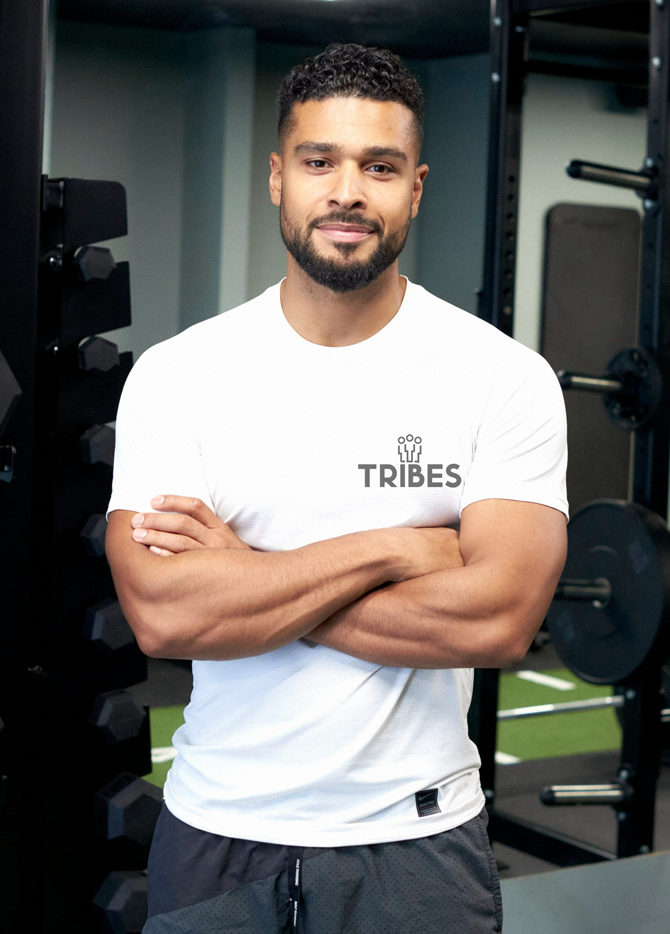
Joshua Caira - TRIBES Head Coach
25 September 2026
Why exercise often exposes problems it didn't create.
Many people experience pain shortly after beginning an exercise programme. The natural conclusion is simple: "Exercise caused my injury."
Of course, exercise can sometimes cause injury. Poor programming, excessive loading, accidents and technical errors do happen. No responsible coach would deny that. But in many cases, what appears to be a new injury is actually the first time an underlying weakness, movement limitation or previous issue has been exposed.
Sometimes that's true, but more often it isn't.
Commonly, training asks the body to do something it has quietly lost the capacity to tolerate. In those cases, exercise hasn't created the problem. It has simply revealed it.
Many of us arrive at the gym carrying years of accumulated wear and tear without even realising it. Perhaps we've spent years sitting at a desk with poor posture. Maybe we've become generally inactive, losing strength, mobility and cardiovascular fitness. Or perhaps we're carrying the remnants of old sporting injuries that never fully recovered.
These things often remain hidden because everyday life simply doesn't ask much of our bodies. Training does.
It asks our joints to move through greater ranges of motion. It asks our muscles to produce force. It asks our heart and lungs to work harder than walking to the kettle or climbing the stairs.
And sometimes, that's when dormant issues first make themselves known.
Shoulder instability.
Hip restrictions.
Weak knees.
Reduced cardiovascular fitness.
Previous back problems.
These aren't necessarily created by training. More often than not, they're the product of years of accumulated lifestyle factors. Exercise simply excavates what was already there, bringing hidden weaknesses to the surface where they can finally be addressed.
That might sound like bad news. In reality, it's often the beginning of the solution.
Weakness revealed is weakness that can be strengthened.
At TRIBES, we encourage clients to view these moments positively.
We never advocate ignoring pain. Rather, identifying a weakness gives us the opportunity to strengthen it before it becomes a bigger problem. A body only becomes more robust by discovering where its current limits are and then gradually expanding them.
Ignoring weakness rarely makes it disappear, addressing it often does.
Progressive overload, not reckless overload
Everything we do is built around the principle of progressive overload.
That simply means gradually asking the body to do slightly more than it did before.
Sometimes that's a little more weight.
Sometimes it's an extra repetition.
Sometimes it's improved movement quality.
Sometimes it's a slightly longer conditioning interval.
Progress isn't made by making huge jumps.
It's built through hundreds of small ones.
Our goal is never to overload tissues beyond what they're prepared to tolerate, but neither can we expect the body to become stronger without being challenged.
Adaptation always requires an appropriate amount of stress.
Perfect form is a myth
One of the biggest misconceptions in fitness is the idea that beginners should only increase weight once their technique becomes perfect.
The problem is that movement doesn't work like that.
Technique improves through repetition.
Strength improves through repetition.
Confidence improves through repetition.
All three develop together.
There is no universally perfect squat.
There is no universally perfect deadlift.
There is only movement that is appropriate for the individual standing in front of the bar.
Good coaching isn't about waiting months until someone moves like an elite athlete before allowing them to progress. It's about ensuring movement is safe enough to progress, while continually refining technique as strength and confidence increase.
Beginners don't become stronger because they first achieve perfect technique; technique and strength evolve together.
Every physical pursuit carries risk
Running carries risk.
Football carries risk.
Cycling carries risk.
Powerlifting carries risk.
Even gardening carries risk.
The goal of coaching isn't to eliminate every possibility of injury. That would mean eliminating challenge altogether. Our role is to minimise unnecessary risk while steadily increasing resilience, strength and capacity over time.
Coaching is built on trust
Finally, coaching is a partnership.
The coach brings experience, judgement and a structured plan. The client brings honesty, consistency and communication. Without trust, progress becomes difficult. A client needs to trust that their coach has their long-term interests at heart.
Equally, a coach needs to trust that a client will communicate openly about symptoms, concerns and how they're responding to training.
Questions are always welcome. In fact, they often lead to better understanding and better coaching. But once a plan has been agreed upon, trust allows both coach and client to move forward with confidence. Without that trust, every ache becomes a source of fear, every progression feels uncertain, and meaningful progress becomes much harder to achieve.
The bigger picture
Exercise is controlled stress - the body adapts because it is challenged appropriately. Muscles become stronger - bones become denser. Hearts become fitter. Confidence grows.
None of those adaptations happen by staying exactly where we are.
Good coaching isn't about avoiding challenge. It's about applying the right amount of challenge, at the right time, for the right person. Because sometimes the greatest gift exercise gives us isn't that it changes the body.
It reveals what the body has been asking us to address all along.