
SHARING OUR PASSION FOR HEALTH & WELLBEING
When life gets hard, let training be your anchor.

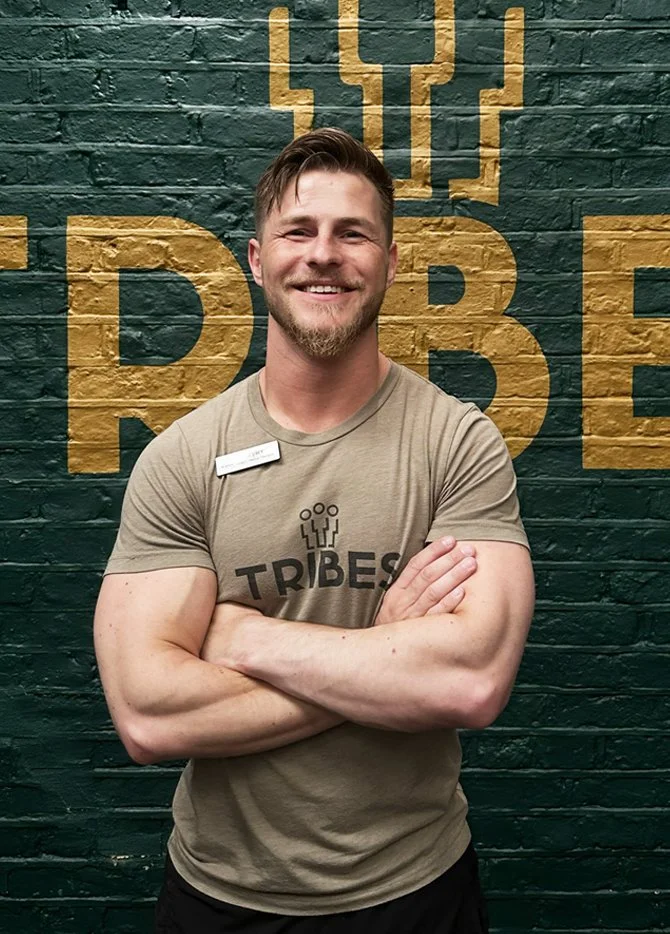
Tyler Reece - TRIBES Soft Tissue Therapist & Personal Trainer
11 September 2026
There are times in life when some things completely fall apart, and it’s out of your control.
Relationships break up, work gets stressful, businesses fold. There are family problems, financial pressures; whatever it is, sometimes the rug gets pulled from under you. When that happens, your health and fitness can quickly become the first things that slip. And to be honest, that’s understandable.
When your head is full, your emotions are high, your energy is low, and your appetite is non-existent, training can feel like the last thing you want to do. Eating properly is an effort, sleep becomes harder, motivation disappears. But this is exactly why your physical health matters during those periods. Not because training fixes everything. Because it doesn’t. But because it gives you an anchor; it keeps you steady.
When life gets chaotic, you need that. Something that reminds you that you still have control over parts of your life. You may not be able to control what's happened, what someone else has done, or how quickly things improve, but you can control whether you train, whether you eat a proper meal, whether you go for a walk, whether you show up for yourself.
In Rudyard Kipling’s poem If, there is a line that says:
“And so hold on when there is nothing in you, except the Will which says to them, Hold on.”
To me, that sums up what training can become during difficult periods in life. It is not always about feeling motivated. It is not always about chasing personal bests, looking your best, or smashing every session.
Sometimes it is much simpler than that. Sometimes it is just holding on.
Holding on to the habits that keep you grounded.
Holding on to the standards you have set for yourself.
Holding on to the role that you have chosen to play.
Holding on to the version of you that you are trying to become, even when life feels like it’s crumbling around you.
Now, I understand that fitness is more important to some people than it is to others. For some, training is a huge part of their life. For others, it’s just something they know they should probably do to be healthier.
But my point is not that fitness needs to sit at the top of your priority list, it is that, when life feels like it’s falling apart, your physical health is one of the things you can still have some control over. It becomes a tool; a way of anchoring yourself. A way of staying at the helm during the storm, instead of being thrown around by it.
You may not be able to control everything happening around you, but you can control whether you show up for yourself in small ways that matter.
This is something I’ve come to understand more through my own life. There have been periods where training has not been about chasing a goal, getting leaner, getting stronger, or anything really. It has simply been about keeping structure when other parts of life have gone to sh*t. In those moments, the gym becomes more than a gym. It becomes somewhere to put everything you are feeling – stress, frustration, sadness, anger, confusion – into something useful.
Do not to bury it. Do not to avoid it.
But to process it in a way that doesn’t destroy you. You will leave with the same problems, but you leave better equipped to face them. And when life feels unstable, that matters.
Getting to the gym is a win.
Finishing the session is a win.
Going for the walk is a win.
Eating the proper meal is a win.
Not abandoning yourself is a win.
Over time, those wins are part of what rebuilds you.
When life is going well, it is easier to train hard, eat well, sleep properly, and stay consistent. When life gets hard, you may just need to simplify things. That does not mean giving up. It means being realistic and focusing on the basics. You do not need the perfect programme. You do not need the perfect diet. You do not need the perfect routine. You need a few basic non-negotiables that keep you moving.
Train, even if the session is shorter.
Walk, even if it is only 10 minutes.
Eat a proper meal.
Drink water.
Get outside.
Go to bed at a reasonable time.
Just get the basics nailed. That’s it, nothing complicated.
The goal is not perfection. The goal is to keep the wheels turning. Because once the basics go, everything quickly follows. But when you keep some structure, you give yourself something solid to stand on and to rebuild from.
The fatal error is not missing one workout. It is missing one workout and then deciding to write off a whole week. It is not one bad meal. It is one bad meal turning into three days of chaos because you told yourself you will start again on Monday. That mindset is what keeps people stuck.
Drop the ball? Pick it back up.
Missed the workout? Train tomorrow.
Had a blowout? Make the next meal better.
Lost a day? Get back to the basics.
Do not turn a stumble into falling flat on your face.
Ultimately, this is not about being perfect. It is about refusing to completely let go of yourself when life gets hard. There will be times where you feel tired, distracted, emotional, angry, flat, or unmotivated. That is normal. But you do not need to feel good to do something good for yourself.
Every time you show up when you don't feel like it, you cast a vote for the person you're becoming. The workout itself matters less than the quiet reminder that your circumstances do not get the final say over your character.
Life will eventually calm down. It always does. When it does, you'll be grateful that you never completely let go of yourself.
The goal was never to become fitter during the storm. The goal is to remain the kind of person who keeps moving forward, even in the storm.